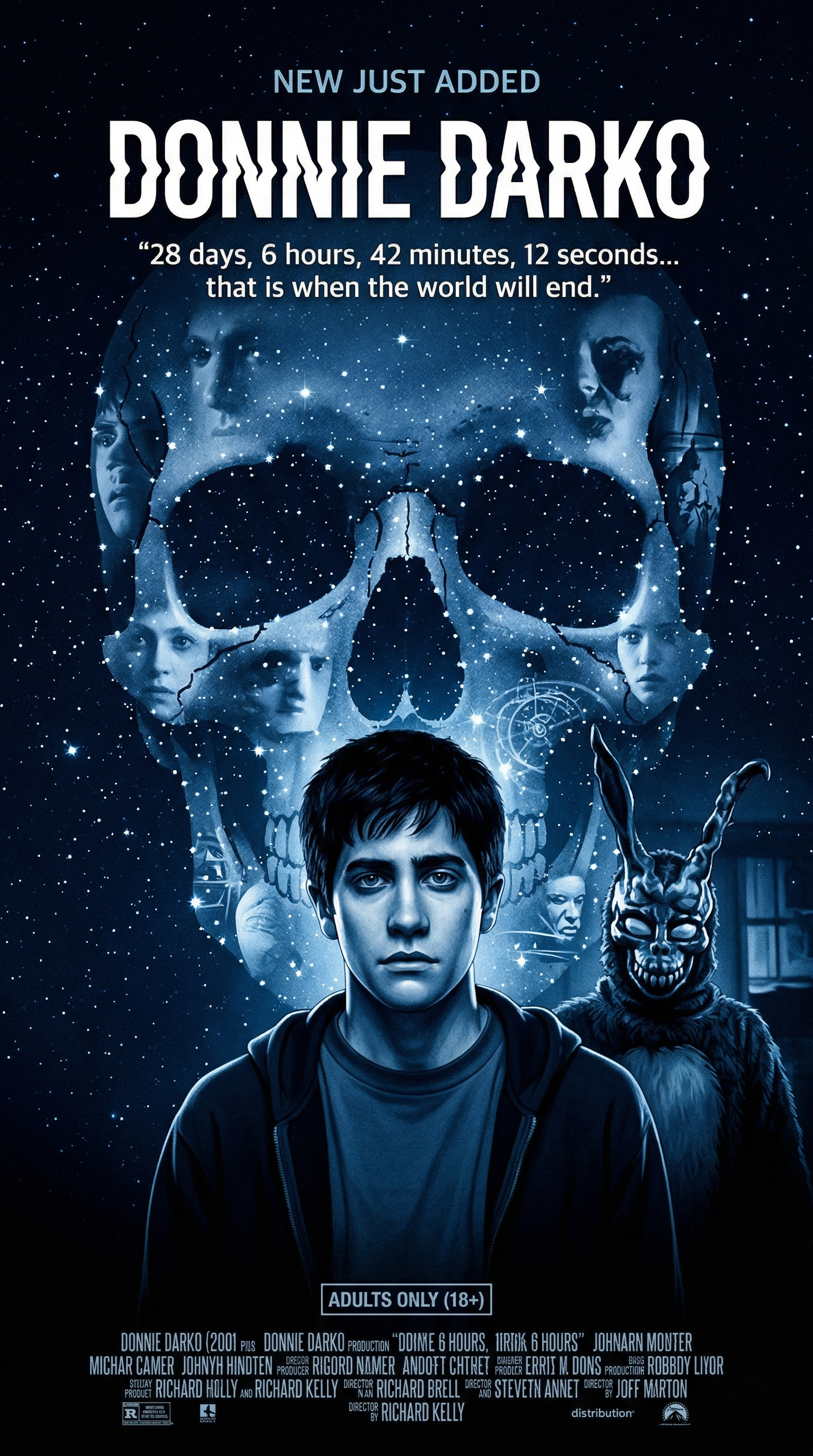
Donnie Darko: Director's Cut (2004)
A troubled teenager survives a near-death accident and begins receiving apocalyptic visions from a monstrous figure in a rabbit suit.
Dir: Richard KellyGenre: Psych/Sci-Fi
ENTER FILM ▶
Click & Watch • Cult Psychological Archive • 18+
A troubled teenager survives a near-death accident and begins receiving apocalyptic visions from a monstrous figure in a rabbit suit.
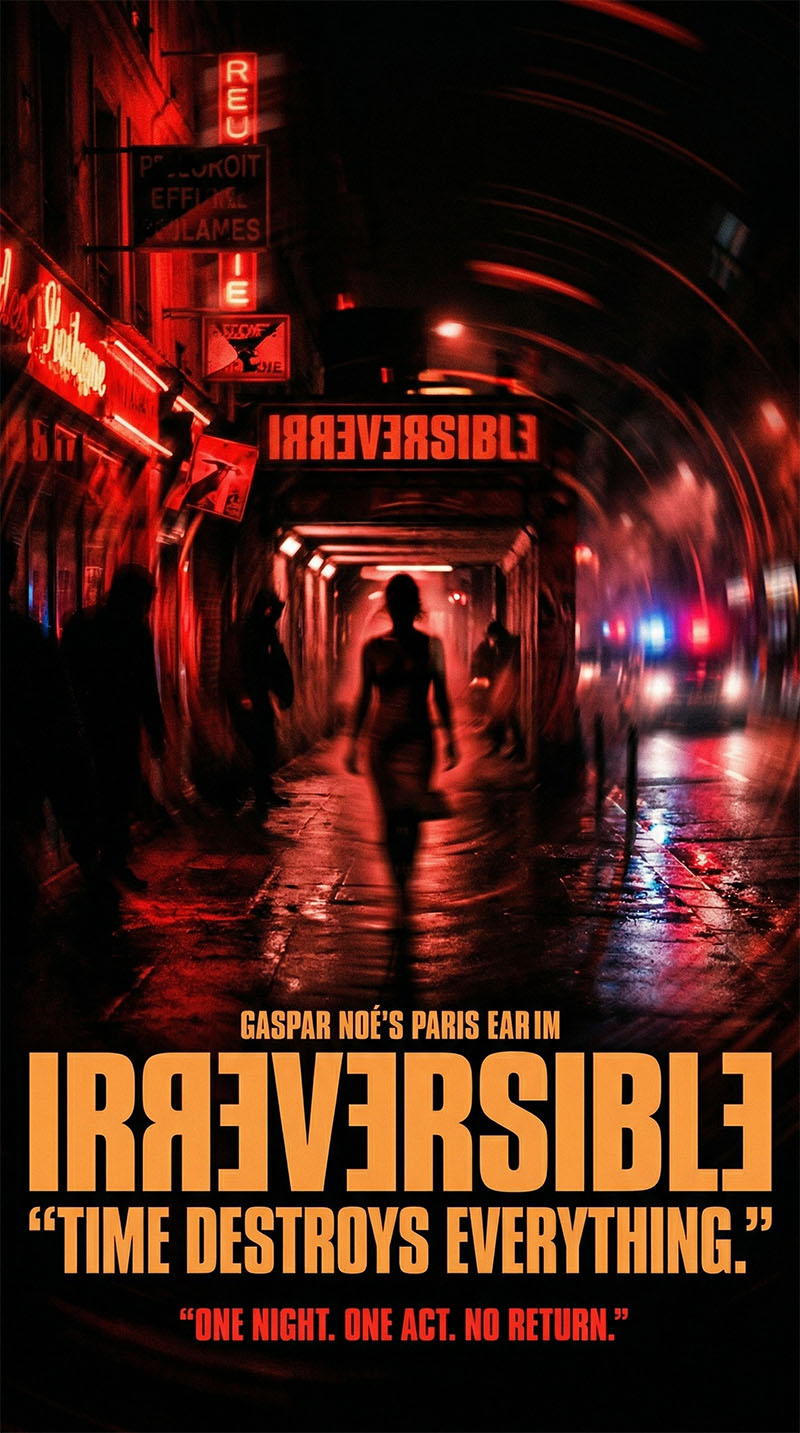
Gaspar Noé's infamous reverse-told nightmare — how violence, chance, and fate collide in one of the most disturbing films ever made.
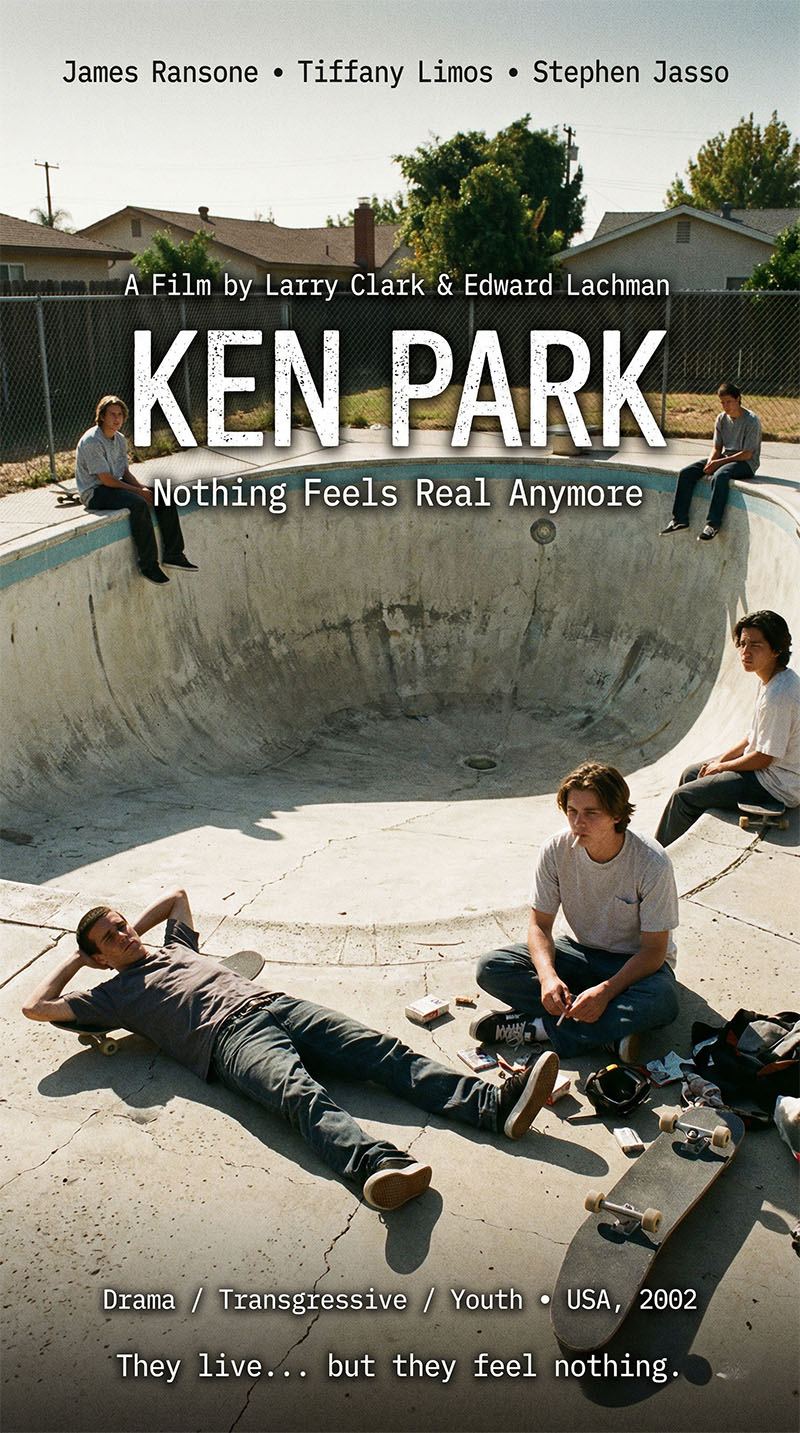
Larry Clark's unflinching portrait of four California teenagers and their shattered home lives laid bare.

In Paris 1968, an American student is drawn into a consuming, erotic-filmic fantasy with a brother and sister.
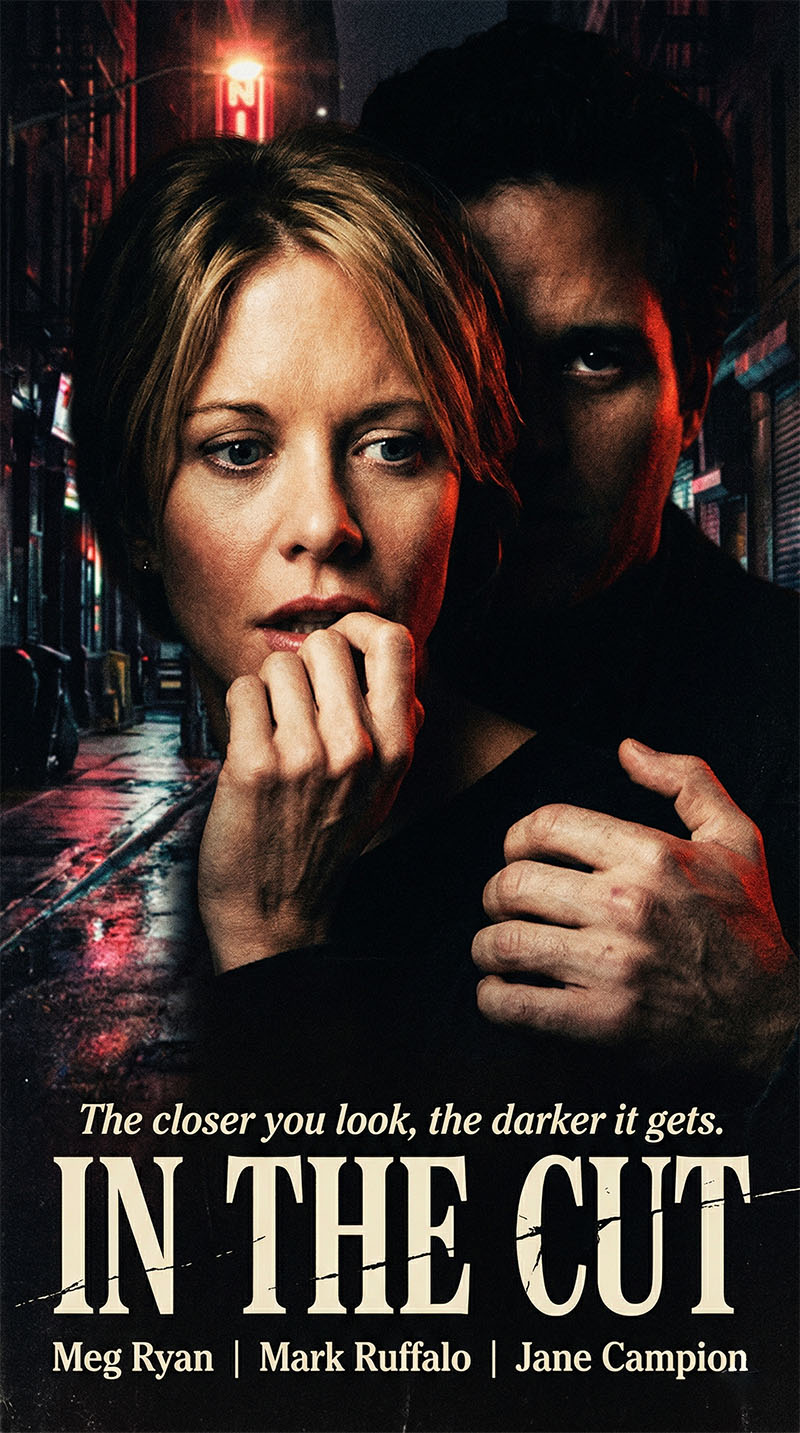
A literature professor becomes entangled in a dangerous liaison with a police detective investigating a brutal murder.
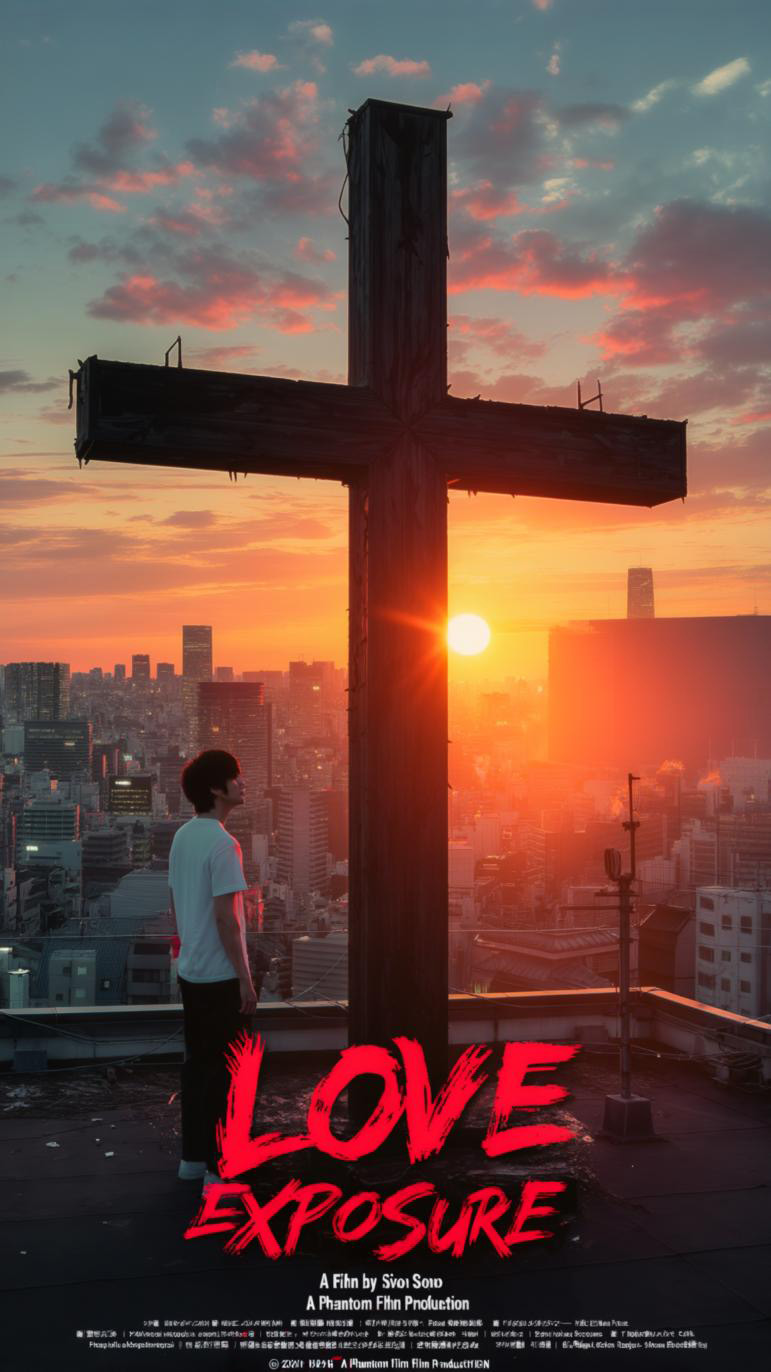
Sion Sono's 237-minute transgressive epic of sin, religion, and obsessive love. A monumental achievement.

A brother returns home to film his sister — revealing dark, uncomfortable family secrets in POV format.
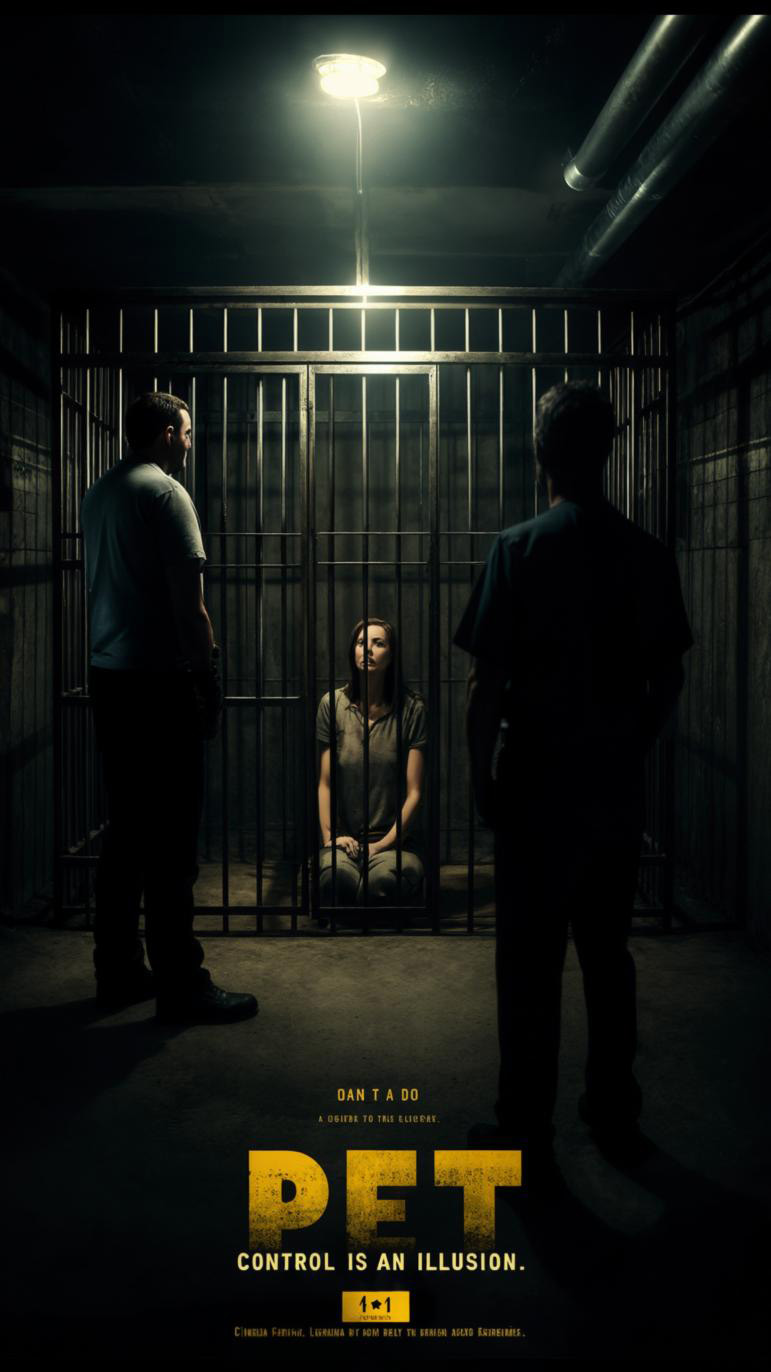
A lonely man traps his obsession in a cage beneath an animal shelter — but the power dynamic turns.
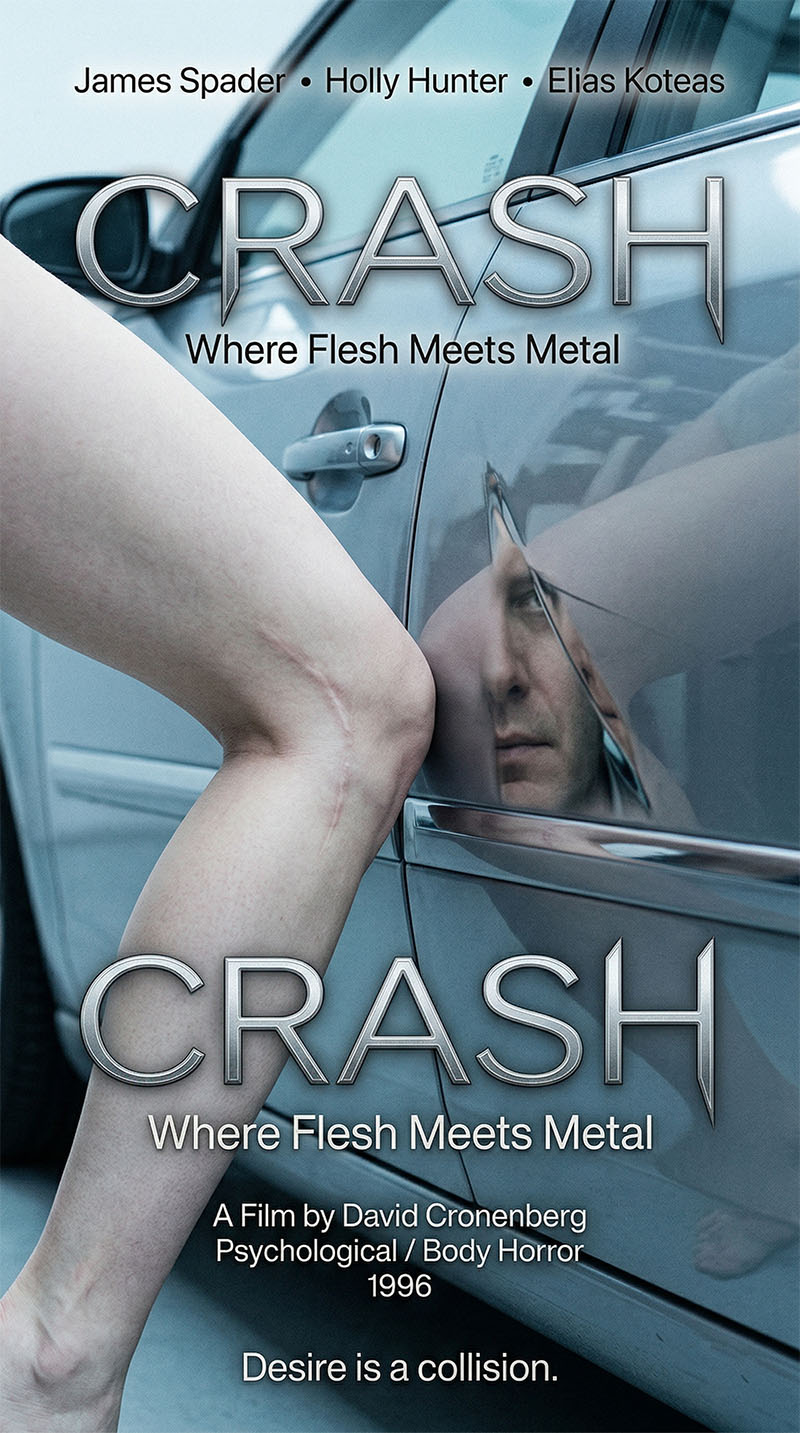
Cronenberg's icy masterpiece — where desire, steel, and destruction fuse into something erotic.
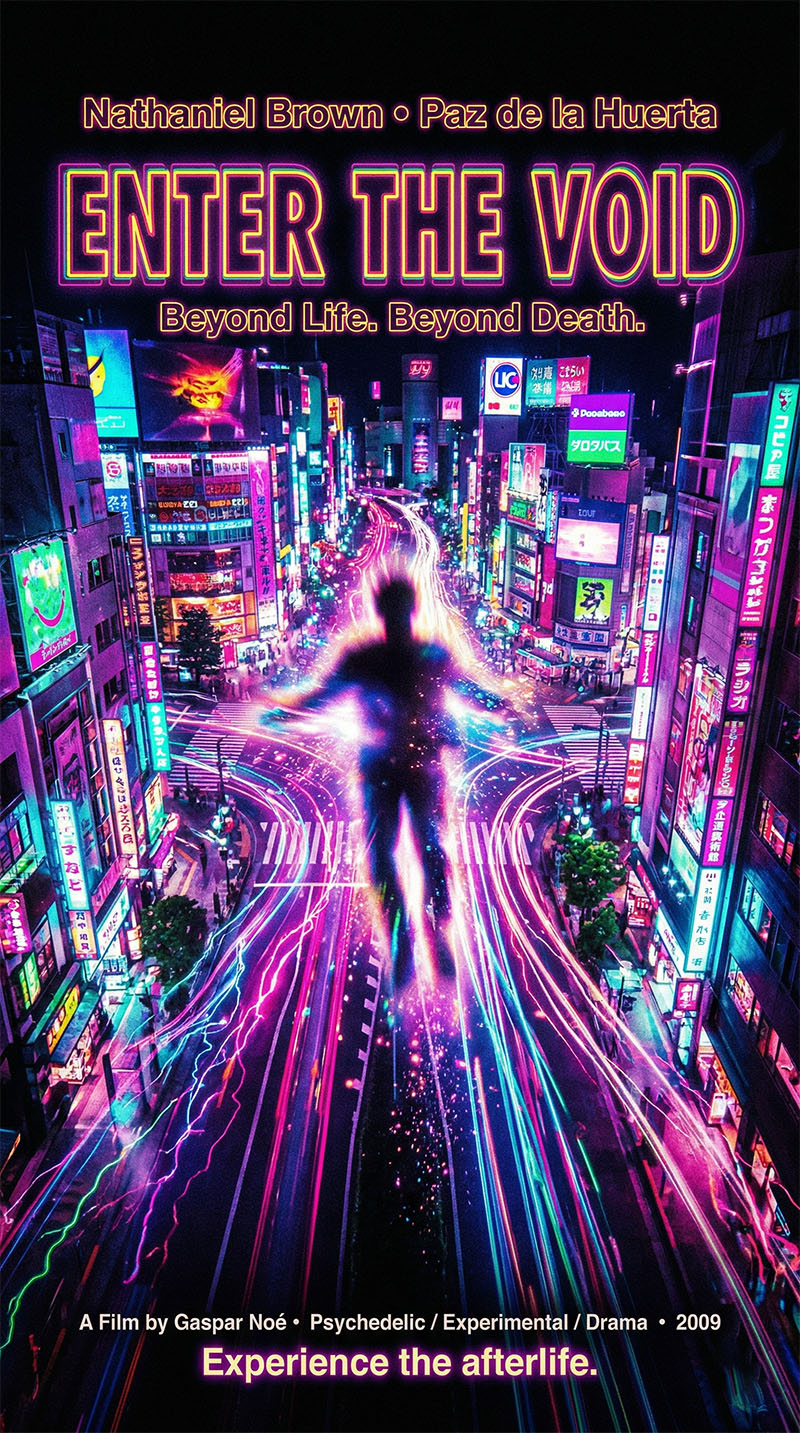
Gaspar Noé's hypnotic psychedelic odyssey — a drug dealer drifts through neon-soaked afterlife.
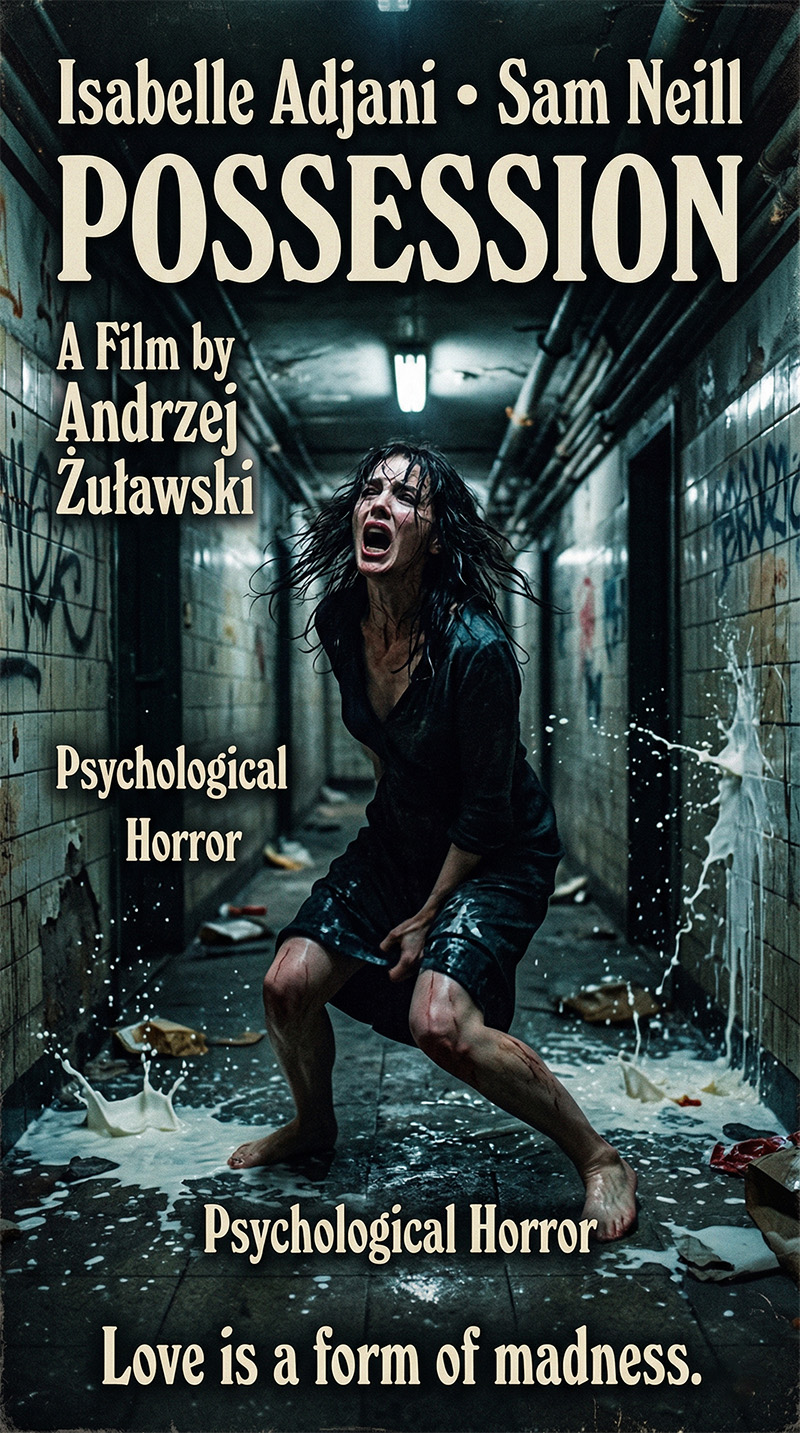
Żuławski's unhinged masterpiece of marital collapse and body horror. Banned in the UK.

Lars von Trier's disturbing horror — a grieving couple retreats where nature and madness merge.
If the foundation of extreme cinema rests on visceral shock, its psychological counterpart is built on the slow, suffocating erosion of boundaries. Hot Transmissions Vol. 2 dedicates its curation to the darkest corners of the human psyche: films that explore the exact point where desire morphs into obsession, and love transforms into a mechanism of captivity.
The films archived in this volume refuse the conventional safety nets of Hollywood thrillers. In mainstream media, a stalker or captor is a clear antagonist to be defeated. In transgressive cinema, the lines are deliberately blurred. Directors operating in this space use the lens to dissect codependency, fatalism, and the terrifying willingness of the human mind to accept—or even crave—its own imprisonment.
We specifically preserve films that tackle these themes through uncompromised cinematic techniques, ensuring that the psychological weight intended by the filmmaker reaches the viewer intact. This involves embedding director's cuts and unrated editions that refuse to sanitize their subjects.
The concept of captivity within this curation extends far beyond physical cages or locked rooms. True psychological extremity manifests in various, often subtle forms:
| Thematic Category | Narrative Focus | Emotional Mechanism |
|---|---|---|
| Physical Entrapment | Literal confinement used to deconstruct power dynamics. | Isolation, Stockholm Syndrome, reversed authority. |
| Erotic Fixation | Lust that escalates past moral and societal boundaries. | Loss of identity, mutual destruction, religious guilt. |
| Fatalistic Loops | Characters trapped by time, inevitability, or prophecy. | Existential dread, the illusion of free will. |
| The Intrusive Lens | Obsession manifested through cameras and voyeurism. | Violation of privacy, objective detachment from humanity. |
It is easy to dismiss films dealing with severe emotional abuse or psychological torment as mere exploitation. However, the Hot Transmissions Vol. 2 archive recognizes these works as vital explorations of our collective shadows. By confronting the extremes of human obsession, these films force audiences to analyze their own intrinsic capacities for control and submission. In a digital era that constantly demands our attention and dictates our desires, understanding the cinematic language of captivity has never been more relevant.
While the entire Sharing The Sickness archive features transgressive cinema, Volume 2 is specifically curated to showcase cult films and psychological thrillers that explore the dark mechanics of obsession, emotional manipulation, and both physical and mental captivity.
Yes. The archive is dedicated to preserving the original intent of extreme cinema. We embed uncut, unrated, and director's cut versions wherever available to maintain the undiluted psychological impact intended by the filmmakers.