
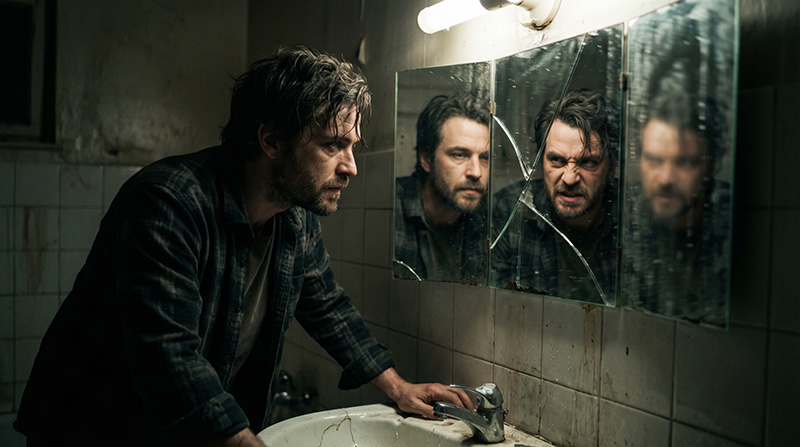
The Weight of Freedom
No Way Home (1996) is one of the most criminally overlooked character studies of 1990s American independent cinema. Directed by Buddy Giovinazzo — the same uncompromising filmmaker who shocked audiences with Combat Shock in 1984 — the film trades surreal horror for a raw, unflinching look at guilt, family loyalty, and the invisible prisons we carry with us long after physical release.
Tim Roth delivers what many consider one of the finest performances of his career as Joey, a man released from prison after taking the fall for his younger brother. Roth’s physical transformation — the stutter, the hunched shoulders, the thousand-yard stare — creates a character who feels permanently damaged by the system that was supposed to rehabilitate him. Opposite him, James Russo explodes as Tommy, a volatile, self-destructive man whose pride and anger continue to destroy everything around him.
💎 Verified Fact: To heighten the emotional distance between the two brothers, director Buddy Giovinazzo instructed Tim Roth and James Russo to avoid all personal interaction off-camera for the first two weeks of filming. This deliberate isolation created genuine awkwardness and hostility that translated directly onto the screen. Roth has said in interviews that this was one of the most emotionally difficult shoots of his career because the character’s sense of alienation mirrored his own feelings on set. The film was shot in just 25 days on a modest budget, and much of the Staten Island locations were real neighborhoods suffering from the exact decay depicted in the story. Giovinazzo drew heavily from real stories of ex-convicts and parole officers he had interviewed while researching the screenplay.
A Masterclass in Quiet Desperation
Claudia Raschke’s grainy, nocturnal cinematography turns Staten Island into a character itself — a decaying landscape that offers no real escape. Deborah Kara Unger adds a layer of bruised sensuality and quiet nihilism as Tommy’s wife. The film refuses to offer cheap redemption or Hollywood catharsis. Instead, it presents a brutal but deeply human portrait of men who are products of their environment, their choices, and the families that both bind and destroy them.
No Way Home remains essential viewing for anyone interested in authentic 90s indie cinema and powerful character-driven drama. It is a film about the sickness of loyalty — the kind that keeps people returning to the very things that destroyed them.
Frequently Asked Questions About No Way Home (1996)
Is No Way Home (1996) related to the Marvel movie?
No. This is a gritty 1996 independent crime drama directed by Buddy Giovinazzo, completely unrelated to any superhero films.
What is the film No Way Home about?
It follows Joey, played by Tim Roth, who returns home after six years in prison only to discover his brother is trapped in a dangerous cycle of crime and debt. The film explores themes of guilt, family loyalty, and the difficulty of breaking free from one's past.
Why is Tim Roth's performance in this film considered special?
Roth delivers one of his most vulnerable and physically transformative performances. His portrayal of a broken, stuttering ex-convict is widely regarded as one of the finest in his career, especially coming after his explosive roles in Reservoir Dogs and Pulp Fiction.
Who directed No Way Home (1996)?
Buddy Giovinazzo, the cult New York filmmaker best known for his uncompromising, realistic portrayals of street life and marginalized characters, directed No Way Home.