
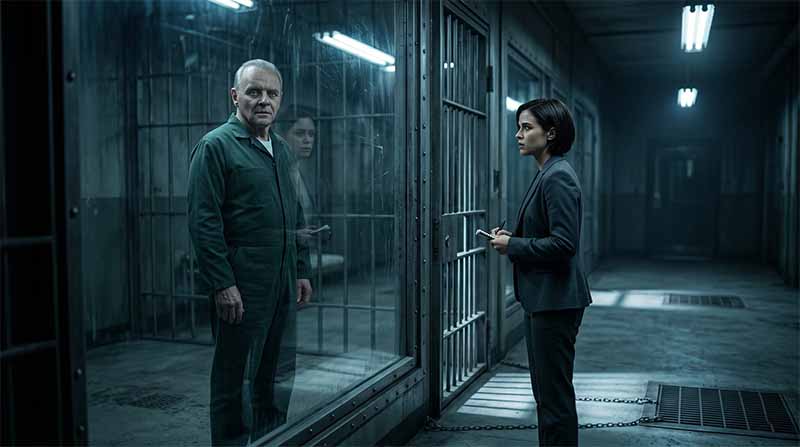
The Anatomy of Terror
Jonathan Demme’s The Silence of the Lambs (1991) remains one of the most perfectly constructed psychological thrillers in the history of cinema. The film follows FBI trainee Clarice Starling as she seeks the help of the brilliant but monstrous Dr. Hannibal Lecter to track down a serial killer known as Buffalo Bill. What unfolds is not merely a hunt for a killer, but a disturbing psychological duel between two extraordinary minds.
The film’s power comes from its restraint. Demme refuses to rely on cheap shocks or excessive gore. Instead, he builds unbearable tension through dialogue, performance, and atmosphere. The camera work, particularly during the interviews between Clarice and Lecter, creates an overwhelming sense of intimacy and danger simultaneously.
Legendary Performances
Anthony Hopkins delivers one of the most memorable performances in film history as Hannibal Lecter. In less than 17 minutes of screen time, he created a character that has haunted audiences for over three decades. Jodie Foster’s portrayal of Clarice Starling provides the film’s emotional and moral center — a young woman fighting to be taken seriously in a world of powerful men while carrying the weight of her own past.
Ted Levine’s terrifying performance as Buffalo Bill adds another layer of dread. The film never allows the audience to feel safe. Every conversation, every silence, every glance carries the potential for horror.
💎 Verified Fact: The Silence of the Lambs is one of only three films in history to win the “Big Five” Academy Awards in a single night: Best Picture, Best Director, Best Actor, Best Actress, and Best Adapted Screenplay. Anthony Hopkins won Best Actor despite appearing on screen for just 16 minutes and 52 seconds — the shortest performance ever to win the award. Jodie Foster prepared for her role by spending time with actual FBI agents at Quantico and studying real behavioral science techniques.
Frequently Asked Questions About The Silence of the Lambs (1991)
Is The Silence of the Lambs (1991) based on a real case?
The film is based on Thomas Harris’s novel, but the characters were inspired by real serial killers, blending psychological realism with fictional storytelling.
Why is Hannibal Lecter so iconic despite limited screen time?
Anthony Hopkins appears for only about 16 minutes, yet his controlled performance, precise dialogue, and psychological dominance make him one of the most memorable villains in cinema.
What makes The Silence of the Lambs different from typical thrillers?
The film focuses on psychological tension rather than action, using dialogue and character dynamics to build suspense instead of relying on traditional thriller pacing.
What themes define the film?
Key themes include identity, control, fear, transformation, and the relationship between hunter and hunted.
Why is The Silence of the Lambs important in film history?
It is one of the few films to win the “Big Five” Academy Awards (Best Picture, Director, Actor, Actress, Screenplay), solidifying its status as a landmark psychological thriller.