
Carax's Melville Adaptation and the Limits of Authenticity
Leos Carax made Pola X in 1999 after a decade of difficult production attempts, emerging from a period of personal and professional crisis that had kept him away from feature directing for nine years. The film is an adaptation of Herman Melville's 1852 novel Pierre, or The Ambiguities — one of the most notorious commercial catastrophes in American literary history, a work so misaligned with public expectation that it effectively ended Melville's career as a novelist after the success of Moby-Dick. Carax's choice of source material is not incidental. Pierre is a novel about the destruction that follows a total commitment to authenticity, and Carax's own career had been organized around exactly that commitment.
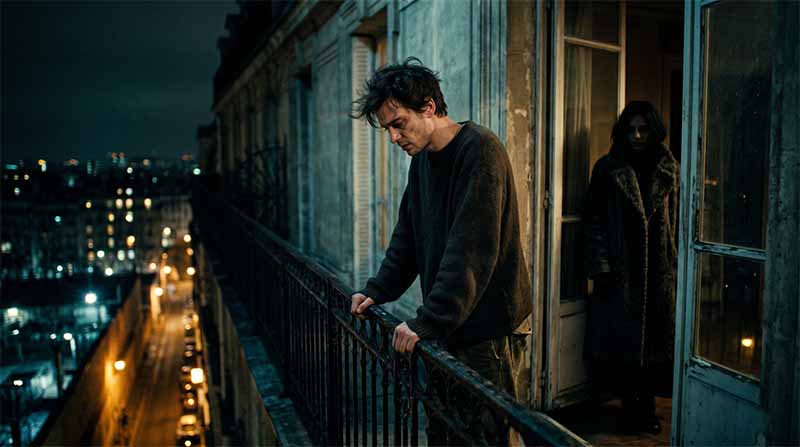
The film's title is an acronym — Pierre ou les Ambiguïtés with X indicating the tenth draft of the screenplay — and the production was conducted simultaneously in French and English, generating two parallel versions of each scene with the same cast. This bilingual strategy, unusual even in co-productions, reflects the novel's transatlantic ambiguities and added considerable complexity to the shoot. Guillaume Depardieu, son of Gérard, plays Pierre with a physical intensity that the script demands but does not moderate: this is a man coming apart in real time, and the camera does not look away.
The TV Cut: What the Extended Version Adds
The theatrical version of Pola X, which premiered in Competition at Cannes in 1999 and runs approximately 134 minutes, compresses the novel's descent into a structure that some critics found too elliptical. The extended TV Cut — also titled Pierre ou les Ambiguïtés and running approximately three hours — restores sequences that expand the film's treatment of the commune where Pierre and Isabelle take refuge, the progressive dissolution of Pierre's writing identity, and the texture of the urban environment that receives them after the château world collapses.
For Carax's work, duration is not padding but an argument about the temporal experience of breakdown. The extended cut asks the viewer to inhabit Pierre's deterioration at a pace that approximates its lived reality. The commune sequences — shot in an industrial space with Scott Walker's score functioning as environmental sound rather than accompaniment — become genuinely claustrophobic in the longer version in a way the theatrical cut's compression prevents. This is the version that makes the film's final devastation feel earned rather than abrupt.
Guillaume Depardieu and Yekaterina Golubeva
The film's central performances operate in registers that conventional psychological realism cannot accommodate. Guillaume Depardieu — who died in 2008 at 37 following medical complications — plays Pierre as a man whose interior life is so pressurized by his need for absolute truth that it has begun to damage him from within. His performance is raw in the literal sense: there is no protective layer of technique between the actor and the character's disintegration. Opposite him, Yekaterina Golubeva's Isabelle is constructed almost entirely from absence and adjacency — a figure who exists at the periphery of every frame she occupies, even when she is its nominal subject.
The film's unsimulated sexual sequences between the two actors were retained by Carax over explicit objections from the French co-producers, who predicted — correctly — that the content would complicate distribution. Carax's position was that the sequences were not gratuitous but structural: the physical relationship between Pierre and Isabelle is the film's central transgression, and representing it with conventional simulation would have been a formal lie incompatible with the project's commitment to authenticity. The co-producers' prediction proved accurate. The film received extremely limited distribution and was commercially unsuccessful in every territory.
💎 Verified Fact: Herman Melville's Pierre, or The Ambiguities (1852) — the novel Carax adapted — sold fewer than 2,000 copies in its first year and generated reviews so savage that several were primarily occupied with questioning Melville's sanity. One New York reviewer titled his notice "Herman Melville Crazy." The commercial and critical failure was so complete that Melville never again attempted a mainstream novel, retreating into poetry and, eventually, the posthumously published Billy Budd. Carax was fully aware of this history when he chose the source material — and Pola X performed almost identically at the box office, earning approximately $1.4 million worldwide against a budget of approximately $15 million. The X in the title, indicating the tenth screenplay draft, is now readable as a second meaning: the Roman numeral for the number of commercial failures required to prove the point the film was making.
Frequently Asked Questions About Pola X – TV Cut (1999)
What is Pola X (1999) about?
Pola X follows a privileged young writer whose life unravels after meeting a mysterious woman claiming to be his sister, leading him into a descent of identity crisis, obsession, and social collapse.
What is the difference between the theatrical version and the TV Cut of Pola X?
The TV Cut is an extended version structured as a mini-series, expanding character development and narrative depth beyond the original theatrical release.
Is Pola X based on a novel?
Yes. The film is loosely inspired by Herman Melville’s novel "Pierre: or, The Ambiguities," which explores identity, morality, and destructive desire.
Why is Pola X considered part of extreme or transgressive cinema?
The film confronts taboo themes such as identity breakdown, incestuous implication, and societal rejection, presented through raw, uncompromising storytelling.
What themes define Pola X?
Key themes include identity crisis, obsession, class abandonment, taboo desire, and the collapse of personal and social structures.