
When Technology Becomes the Messenger of Death
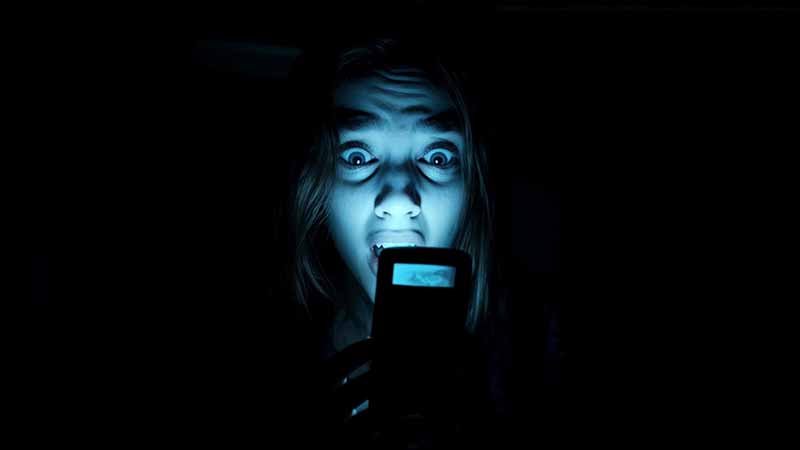
By 2003, the Japanese horror wave had already proven that the mundane could be made monstrous — televisions, telephone calls, domestic corridors. Then came One Missed Call (Chakushin Ari), directed by the relentlessly prolific Takashi Miike, and the instrument of terror was the mobile phone. Where Ringu weaponized the VHS cassette and Ju-On colonized domestic space with residual trauma, Miike turned the device that, by 2003, had become the central nervous system of Japanese social life into something irredeemably malevolent. A cheerful ringtone. A message from the future. The recorded sound of your own death.
The premise moves with the clean logic of a nightmare. A small group of university students begin receiving voicemails on their phones — messages dated two or three days ahead, each containing the final moments of the recipient's life. The victim hears their own last sounds: a scream, a crash, a terrible silence. When the timestamp arrives, the death occurs exactly as recorded. The curse migrates from phone to phone like a virus, from person to person through networks of acquaintance, and there is no obvious immunity, no escape, and — for most of the film — no discernible origin.
Miike's Architecture of Dread: Restraint as a Weapon
What separates One Missed Call from its contemporaries is Miike's precise decision to restrain himself. This is the director who made Audition and Ichi the Killer — a filmmaker with an established tolerance for extremity far beyond most of his peers. Yet here, he distributes his shocks across the narrative with surgical discipline, arriving without warning and retreating just as quickly. The effect is a film that never allows the viewer to settle. Any scene could detonate. Any moment of apparent calm is an invitation the film may or may not accept.
Ko Shibasaki carries the film in a performance of controlled deterioration — a young woman watching her social world methodically erased, forced into an investigation that offers answers but refuses comfort. Her scenes alongside detective Shinichi Tsutsumi provide a procedural structure that gives the horror a rational framework, which Miike then systematically dismantles. The investigation moves toward an origin — a specific tragedy, a specific mother, a specific child — and the revelation transforms the film's genre register entirely. What begins as technological horror ends as something closer to grief made supernatural.
The visual language is meticulous and cold. Miike employs wide, static shots that turn ordinary spaces — a hospital ward, a commuter platform, a university cafeteria — into stages for events that should not be possible. His palette is desaturated, clinical, broken only by sudden intrusions of violent color that appear and vanish without apology. There is no sonic buildup to the horror sequences, no swelling score to guide the audience's response. The ringtone arrives, and then the image does what it does.
The Cultural Architecture of the Ringtone
Central to the film's enduring power is its signature ringtone — a bright, almost childlike melody composed by Kôji Endô that became one of cinema's most effective audio triggers. Miike and Endô understood that the most disturbing sounds are those that should be benign. The ringtone was engineered to lodge in memory, so that every subsequent mobile phone — in the film, in a cinema auditorium, in daily life — could become a source of involuntary dread. In Japan, the melody was widely downloaded as an actual mobile ringtone in 2003 and 2004, a phenomenon with no clear Western equivalent: a population voluntarily installing the sound of cinematic death onto devices they carried everywhere.
This is the deepest layer of the film's intelligence. One Missed Call is not simply a horror film using mobile phones as a backdrop — it is a film about the way connectivity transforms mortality. Every person in the film is reachable by everyone they know. The curse exploits this reachability, turning the infrastructure of social intimacy into a death-delivery mechanism. The more connected you are, the more exposed you become. In 2003, this read as paranoid. In 2026, it reads as observation.
★ THE DIAMOND TIP: The Remake That Achieved the Impossible
💎 Verified Fact: The 2008 American remake of One Missed Call, directed by Eric Valette and released by Warner Bros., achieved a 0% approval rating on Rotten Tomatoes — based on 32 reviews, with not a single positive notice. It holds this distinction as one of the few wide-release studio films in the site's history to reach zero. The original Miike film, by contrast, holds a 47% rating from the same publication. The gap between those two numbers is a precise quantitative record of what is lost when J-Horror is transplanted without its cultural substrate.
Frequently Asked Questions About One Missed Call (2003)
What is One Missed Call (2003) about?
The film follows a series of mysterious deaths linked to voicemails received from the future, where victims hear the exact moment of their own death before it happens.
Is One Missed Call connected to other J-horror films like The Ring or Ju-On?
Yes in style and era. Directed by Takashi Miike, it shares the same early-2000s J-horror wave that focuses on curses spreading through modern technology.
What makes One Missed Call different from typical ghost horror?
The curse spreads through mobile phones, turning everyday technology into a medium of death, which made the concept especially relevant at the time.
What themes define One Missed Call?
Key themes include technology anxiety, inevitability of death, unresolved trauma, and the idea that the past can reach into the present through modern systems.
Was One Missed Call remade in Hollywood?
Yes. An American remake was released in 2008, though it was widely criticized compared to the original Japanese version.