
The Birth of First-Person Splatter: Necrostorm’s Brutal Vision
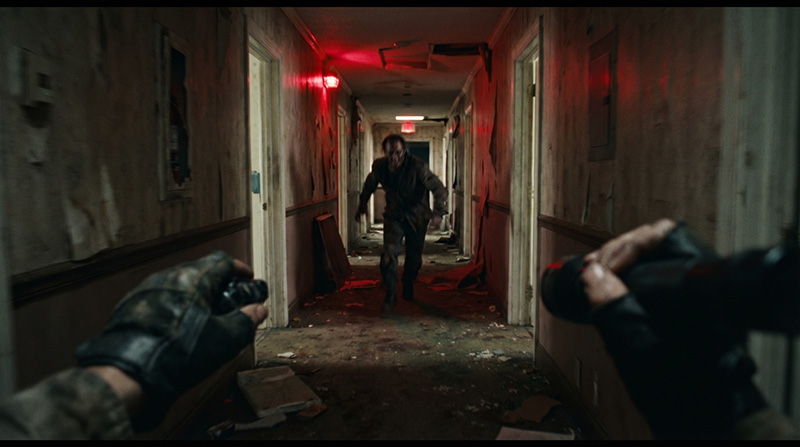
In the landscape of extreme independent horror, few films have pushed the boundaries of immersion as aggressively as Hotel Inferno (2013). Directed by Giulio De Santi and produced under the Necrostorm banner, this Italian production completely abandons traditional third-person cinematography. Instead, it locks the audience into the unrelenting first-person perspective of a contract killer named Frank Zimosa, turning the viewer into both witness and participant in a blood-soaked descent through a hotel from hell.
The concept is deceptively simple: a hitman completes his job only to wake up trapped in a nightmarish building filled with demonic cultists and grotesque creatures. What follows is an 80-minute adrenaline-fueled slaughter as he fights floor by floor. By removing the safety of the camera’s distance, De Santi creates a visceral, exhausting, and strangely intimate experience that feels closer to playing a horror video game than watching a traditional film.
💎 Verified Fact: Giulio De Santi did not use a traditional camera operator for most of the film. Instead, he built a custom steel head rig weighing over 12 kilos that was strapped directly to actor Rayner Bourton’s head. The rig held two synchronized cameras — one for the main POV and one for safety. Because the rig was so heavy and painful, Bourton could only wear it for 12–15 minutes at a time before needing long breaks. During one particularly brutal sequence on the 5th floor, the rig malfunctioned and sliced Bourton’s scalp, causing real blood to mix with the fake blood on camera. De Santi chose to keep the take because the blood looked more authentic than anything they could create artificially. This real injury, combined with the proprietary blood formula that actually smelled like iron, left several crew members physically ill on set. Very few people know that this “accidental realism” became one of the most praised moments in the finished film.
From Italian Giallo to Digital Carnage
Italy has long been the spiritual home of extreme horror. Where Bava gave us gothic elegance and Fulci gave us rotting flesh and eyeballs, Giulio De Santi brings the aesthetic of first-person shooter video games into the splatter genre. The hotel itself becomes a character — each floor introducing new variations of demonic horror and increasingly elaborate kill sequences. The rigid POV never breaks, creating a sense of claustrophobia and complicity that few films have matched.
While mainstream audiences discovered the first-person format years later with Hardcore Henry, Hotel Inferno predates it and remains far more extreme. It makes no attempt to soften its violence or provide conventional narrative comfort. This is pure, unfiltered transgressive cinema designed to overwhelm the senses.
Why Hotel Inferno Belongs in the Sharing The Sickness Archive
We curate Hotel Inferno because it represents a genuine evolution in extreme horror filmmaking. It rejects traditional storytelling in favor of total sensory immersion. It proves that practical effects, when executed with sadistic creativity and technical precision, still deliver far more impact than digital blood. For fans of uncompromising, boundary-pushing cinema that celebrates the grotesque and the relentless, this film is essential viewing.
The Necrostorm trilogy stands as one of the most dedicated commitments to first-person horror ever created. Hotel Inferno remains the bloody, chaotic, and unforgettable beginning of that journey.
Frequently Asked Questions About Hotel Inferno (2013)
Is Hotel Inferno filmed like a video game?
Yes. The entire film is shot in strict first-person POV, deliberately mimicking the visual language and movement of first-person shooter video games such as DOOM and Quake. This creates an immersive and relentless experience.
What is the Necrostorm studio?
Necrostorm is an independent Italian production company founded by Giulio De Santi, specializing in extreme horror and practical effects-driven splatter films. Hotel Inferno was their breakthrough project that spawned a trilogy.
Are there sequels to Hotel Inferno?
Yes. The film launched a franchise with Hotel Inferno 2: The Cathedral of Pain (2017) and Hotel Inferno 3: The Castle of Totems (2021), both continuing the story in the same uncompromising first-person style.
How was the extreme gore achieved on such a low budget?
The team developed proprietary practical effects techniques using custom blood mixtures and hand-built animatronics designed to be destroyed on camera. Almost all effects were achieved in-camera.
What themes are explored in Hotel Inferno (2013)?
The film explores damnation, violence, survival, and descent into hell, using chaotic visuals and constant action rather than traditional narrative structure.