
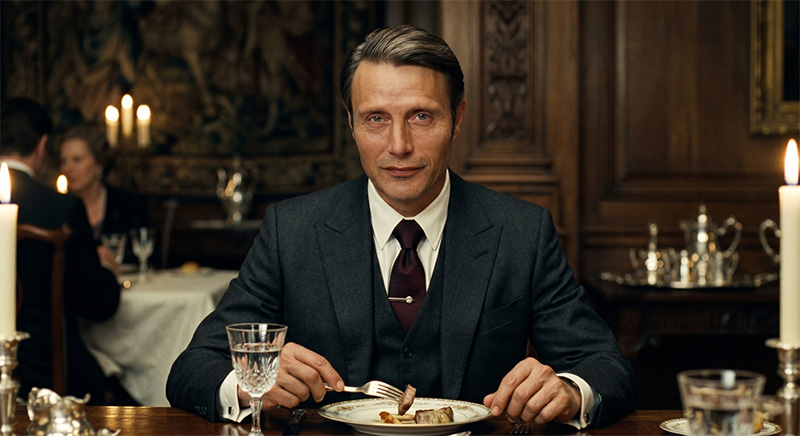
The Silence Is Broken: Ridley Scott’s Baroque Horror Opera
When Ridley Scott stepped in to direct the sequel to The Silence of the Lambs, he made a deliberate choice: he would not repeat Jonathan Demme’s cold, procedural style. Instead, Scott transformed Thomas Harris’ novel into a visually extravagant, operatic feast for the senses — a baroque nightmare where beauty and depravity are inseparable.
Set against the breathtaking Renaissance architecture of Florence, Hannibal (2001) presents Dr. Lecter not merely as a monster, but as a cultured, almost romantic figure moving through a world that both fears and fascinates him. Anthony Hopkins returns with even greater elegance and menace, while Julianne Moore brings a hardened, wounded gravity to Clarice Starling. The film’s most unforgettable antagonist, however, is Mason Verger — portrayed in a tour-de-force of prosthetics by an uncredited Gary Oldman.
💎 Verified Fact: The legendary “brain scene” consumed a massive part of the practical effects budget. A $70,000 fully articulated animatronic replica of Ray Liotta’s head was constructed — capable of blinking, moving its eyes, and jaw in real time. Ray Liotta himself sat beneath a table with his real head protruding through a hole while the mechanical skull was fitted on top with layers of prosthetics. The “brain” Hannibal consumes was a carefully prepared mixture of veal gelatin and soy sauce designed to glisten realistically under studio lights. Anthony Hopkins improvised several lines during filming specifically to provoke genuine expressions of disgust from Julianne Moore. Ridley Scott replaced Jonathan Demme after Demme refused to direct, citing ethical concerns about further glamorizing Lecter. Jodie Foster also declined to return, reportedly disturbed by the novel’s romantic conclusion between Clarice and Hannibal. The film still grossed over $350 million worldwide, proving that audiences were more than ready for Lecter’s return — no matter how baroque or disturbing the presentation.
Florence as a Character
John Mathieson’s cinematography turns the city of Florence into a living, breathing character. Golden light bathes ancient palazzos while shadows conceal unspeakable acts. Hans Zimmer’s score — blending classical elegance with modern dread — perfectly complements Scott’s vision. The film is less interested in police procedure than in the aesthetic and philosophical dance between predator and prey.
The infamous dinner scene, the wild boar hunt, the Florence market chase, and the final confrontation at Verger’s estate all serve the same purpose: to show that true horror can be beautiful, and that beauty itself can be horrifying. This is the “sickness” the film explores — the seductive pull of refined evil.
Why Hannibal Belongs in the Sharing The Sickness Archive
We curate Hannibal because it represents a rare moment when mainstream Hollywood allowed a director to make a $90 million art-horror film. It refuses to apologize for its excesses. It embraces the grotesque with the same reverence it shows Renaissance art. For fans of transgressive, visually ambitious cinema, it remains an essential and unforgettable experience.
Frequently Asked Questions About Hannibal (2001)
Is the brain-eating scene in Hannibal real or CGI?
The infamous dinner scene is a groundbreaking combination of practical effects and early CGI. A $70,000 animatronic replica of Ray Liotta’s head was built that could blink, move its eyes, and jaw in real time. The brain itself was a specially prepared veal gelatin mixture. Anthony Hopkins improvised several lines to elicit genuine reactions from Julianne Moore.
Why didn’t Jodie Foster return as Clarice Starling?
Jodie Foster declined to reprise her role, reportedly finding the direction of Thomas Harris’ novel morally objectionable — particularly the romantic relationship that develops between Clarice and Hannibal. Julianne Moore stepped in and delivered a more hardened, world-weary version of the character.
Why is Hannibal so different in tone from The Silence of the Lambs?
Ridley Scott deliberately moved away from Jonathan Demme’s clinical, claustrophobic style. He embraced the baroque, operatic, and visually extravagant tone of Harris’ novel, turning Florence into a character and presenting Lecter as a dark romantic anti-hero rather than pure monster.
Was Gary Oldman credited in Hannibal?
No. Gary Oldman requested his name be removed from the credits so audiences would not recognize him as the heavily disfigured Mason Verger. His transformation required six hours of prosthetic makeup daily and remains one of the most disturbing character designs in mainstream cinema.
Who directed Hannibal (2001)?
Hannibal was directed by Ridley Scott, known for his visually rich storytelling and ability to blend horror with grand cinematic style.