
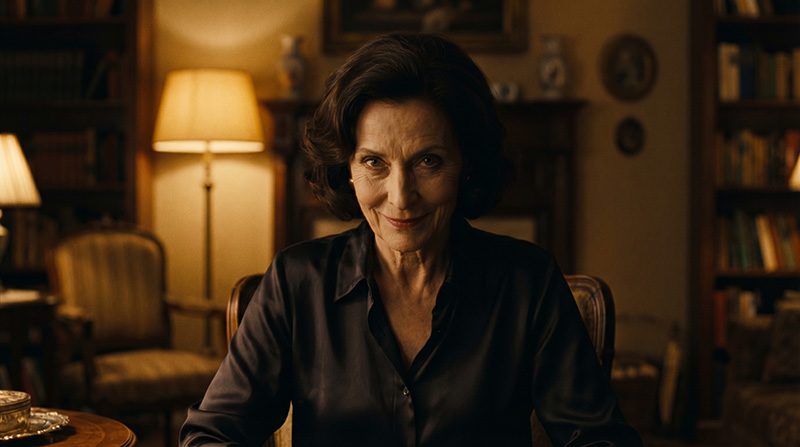
Kindness Is The Most Dangerous Trap: Neil Jordan’s Greta
Neil Jordan, the master storyteller behind The Company of Wolves, Interview with the Vampire, and The Crying Game, returns with a deceptively elegant modern gothic in Greta (2018). On the surface it appears to be a sleek psychological thriller. In reality, it is a dark urban fairy tale about how predators have evolved to weaponize our best instincts against us.
When young, grieving waitress Frances McCullen (Chloë Grace Moretz) finds an expensive green handbag abandoned on the New York subway, she does what any decent person would do — she returns it. This single act of kindness opens the door to Greta Hideg (Isabelle Huppert), a seemingly lonely and cultured French widow. What follows is a masterclass in slow-burn psychological horror as Greta’s maternal affection curdles into something possessive, unhinged, and ultimately deadly.
💎 Verified Fact: Isabelle Huppert did not use a hand double for any of the piano sequences. Having trained seriously as a classical pianist for over a decade before becoming an actress, she performed every piece herself — including the demanding Liszt compositions. This technical authenticity adds a chilling layer to the character. Huppert studied real obsessive-compulsive behavioral patterns and refused to play Greta as a cartoon villain. Instead, she insisted on finding the genuine, aching loneliness beneath the madness. The cabinet full of identical green handbags discovered in Greta’s apartment is based on real “lost bag” predation tactics used in major cities. Each bag represents a previous victim. Neil Jordan deliberately framed the entire story as a modern fairy tale: the lost handbag is the breadcrumb trail, Greta is the wolf disguised as a lonely grandmother, and the hidden room behind the piano is the witch’s oven. Kindness itself becomes the most dangerous trap.
The Fairy-Tale Subtext and Visual Language
Jordan has always been fascinated by fairy tales twisted into adult nightmares. In Greta he transplants that sensibility into contemporary New York. The film is drenched in rich, high-contrast cinematography by Seamus McGarvey that turns the bright, bustling city into an arena of isolation and dread. Greta’s apartment — with its old-world European charm, heavy velvet curtains, and the massive piano hiding a secret room — functions as a modern gingerbread house.
The recurring image of the identical green handbags is brilliant in its simplicity. They are not just props. They are trophies. Each one represents another young woman who made the fatal mistake of being kind. The film slowly reveals that Frances is not the first, and almost certainly won’t be the last.
Huppert’s Masterclass in Maternal Terror
Isabelle Huppert delivers one of her most memorable performances. She walks a razor’s edge between fragile loneliness and feral possession. Her Greta is elegant, cultured, and deeply damaged. The way she shifts from warm maternal concern to cold, calculating rage is genuinely unsettling. Paired with Chloë Grace Moretz’s vulnerable, wide-eyed performance and Maika Monroe’s street-smart Erica, the film becomes a triangle of female power, vulnerability, and predation.
The film’s greatest strength is its refusal to rely on cheap jump scares. Its horror is psychological and claustrophobic. It understands that the most terrifying thing is not a monster in the dark — it is realizing that the person you trusted most has been studying you, manipulating you, and preparing to never let you leave.
Why Greta Belongs in the Sharing The Sickness Archive
We curate Greta because it is a perfect example of transgressive genre filmmaking that respects the intelligence of its audience. It takes the familiar “obsessive stalker” formula and injects it with European art-house sensibility, dark humor, and genuine psychological insight. It explores how predators exploit social decency, how grief makes us vulnerable, and how the line between loneliness and madness can be terrifyingly thin.
In an era of loud horror, Greta proves that elegance, style, and a truly committed performance can be far more disturbing than any amount of gore. It is a wicked, stylish, and deeply unsettling modern fairy tale for adults.
Frequently Asked Questions About Greta (2018)
Is Greta (2018) based on a true story?
Not a specific true story, but the film is inspired by very real 'lost bag' scams used by predators in major cities. The tactic of leaving valuable items to lure kind strangers is a documented urban predation method.
What do the green handbags represent in Greta?
Each identical green handbag is a trophy. Greta leaves them on the subway as bait to lure kind, lonely young women. The cabinet full of identical bags in her apartment reveals she has been doing this for years — each one representing a previous victim.
Did Isabelle Huppert play the piano herself?
Yes. Huppert trained as a classical pianist for over a decade before becoming an actress. She performed all the piano pieces in the film herself, including the demanding Liszt compositions. This authenticity makes her performance as Greta even more chilling.
What is the significance of the fairy-tale elements in the film?
Neil Jordan, director of The Company of Wolves and Interview with the Vampire, deliberately framed Greta as a modern urban fairy tale. Greta is the wolf disguised as a lonely grandmother. The handbag is the breadcrumb trail. The hidden room behind the piano is the witch’s oven. Kindness itself becomes the most dangerous trap.
Who directed Greta (2018)?
Greta was directed by Neil Jordan, known for blending psychological tension with character-driven storytelling.