
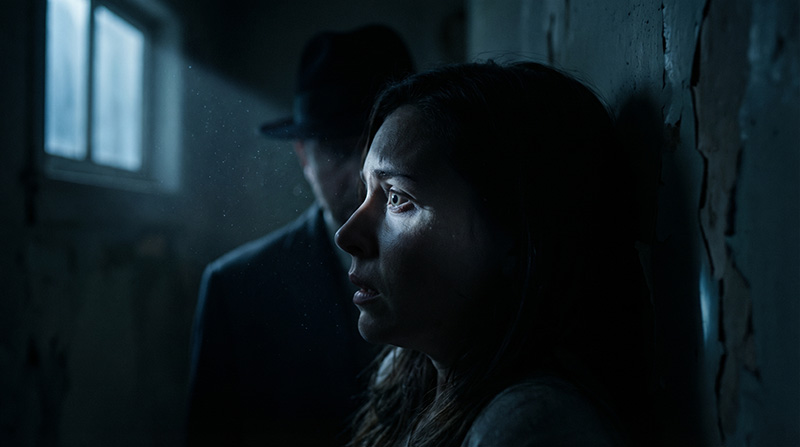
The Hunter Becomes the Hunted: Fede Álvarez’s Don’t Breathe
After the blood-soaked remake of Evil Dead, director Fede Álvarez deliberately chose restraint. Don't Breathe (2016) is a masterclass in tension, sound design, and moral inversion. Three Detroit thieves target a blind veteran they believe is an easy mark. What they discover is a man whose other senses have been honed into lethal weapons — a predator who knows every inch of his fortified home.
The genius of the film lies in its reversal of the home-invasion formula. We begin rooting for the young criminals, desperate to escape their broken lives. By the time the basement secret is revealed, the audience’s moral compass has been completely shattered. Stephen Lang’s performance as “The Blind Man” is one of the most terrifying in modern horror — a near-silent force of nature driven by grief, rage, and military precision.
💎 Verified Fact: Both Stephen Lang and the young actors wore custom contact lenses that severely restricted their vision during filming. Lang’s lenses reduced his sight by roughly 90% in low light. For the legendary blackout basement sequence, the cast performed in near-total darkness while the crew monitored them with thermal cameras for safety. The eerie visual look was created in post-production using extremely high ISO, strategic lighting, and aggressive color grading. This commitment to authenticity created genuine panic and disorientation on set — exactly what appears on screen. The infamous turkey baster scene was so repulsive during test screenings that the studio demanded it be cut. Fede Álvarez fought to keep it, arguing it was essential to the film’s exploration of trauma, legacy, and moral horror.
From Evil Dead to Pure Suspense
Álvarez has said Don't Breathe was a direct reaction to criticism of Evil Dead — too much blood, too much shock value. Here he strips everything back. There are almost no jump scares. The terror comes from sound, from silence, from the creak of a floorboard, from the knowledge that the hunter can hear every breath you take. Cinematographer Pedro Luque’s use of darkness is revolutionary. The film forces the audience to experience the same sensory deprivation as the characters.
The moral reversal is what makes the film linger. The thieves are not innocent. The Blind Man is not simply a victim. By the final act, there are no heroes — only survivors. The film asks uncomfortable questions about justice, revenge, and what a person is willing to do to protect what little they have left.
Why It Remains Essential
Almost a decade later, Don't Breathe still feels fresh. It is one of the smartest mainstream horror films of the 2010s — technically flawless, thematically brutal, and relentlessly tense. It proved that horror does not need supernatural monsters when human desperation and human capability are weaponized so effectively.
We curate this film because it stands as a high-water mark for sensory-driven suspense. It is a film that does not rely on gore for impact (though it has its moments) but on the primal fear of being hunted in the dark by someone who knows the terrain better than you ever could. In a genre often accused of repetition, Don't Breathe feels singular.
Frequently Asked Questions About Don't Breathe (2016)
Did Stephen Lang actually wear restrictive contact lenses?
Yes. Lang wore custom contact lenses that reduced his vision by approximately 90% in low light. The other actors wore lenses that created dilated pupils while also severely limiting their sight during the blackout sequences. This forced genuine disorientation and authentic performances.
Was the basement blackout scene shot in complete darkness?
The actors performed in near-total darkness. The crew used thermal cameras for safety monitoring. The eerie visual look was achieved through high ISO, specific lighting, and heavy color grading in post-production.
Why did Fede Álvarez make Don't Breathe after Evil Dead?
Álvarez wanted to react to criticism of Evil Dead (too much blood, too much shock). He deliberately created an original story with less gore, more suspense, and no supernatural elements — a masterclass in tension through sound and restraint.
What is the controversial turkey baster scene about?
It reveals the Blind Man’s plan to use Rocky to create a “replacement” for his dead daughter. The scene was so disturbing it nearly got cut after test screenings, but Álvarez fought to keep it as it perfectly encapsulates the film’s moral horror.
Who directed Don’t Breathe (2016)?
Don’t Breathe was directed by Fede Álvarez, known for crafting intense, claustrophobic horror experiences.