
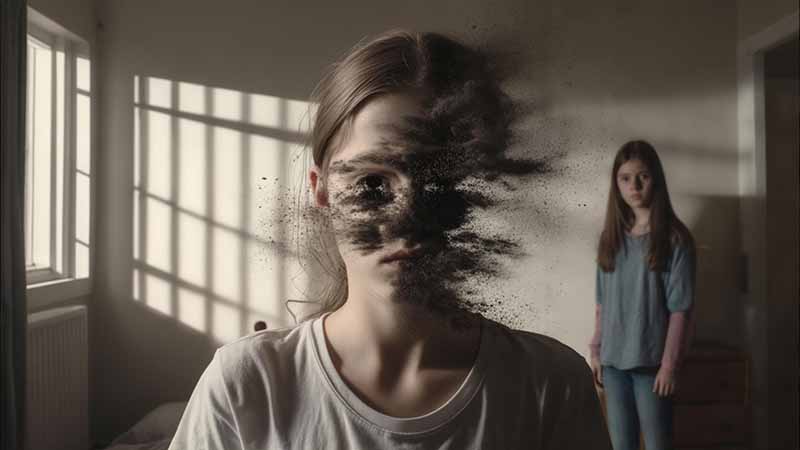
Breathe (2014): Mélanie Laurent's Portrait of Friendship as Slow Annihilation
Breathe — released in France as Respire — is Mélanie Laurent's second feature as director, and its arrival announced the emergence of a genuinely uncomfortable authorial sensibility. Laurent, internationally known as an actress from Quentin Tarantino's Inglourious Basterds (2009) and Michel Gondry's Beginners (2011), here operates with a coolness and precision that most established directors take decades to acquire. The film is an adaptation of the 2001 French young adult novel by Anne-Sophie Brasme — a book written when Brasme was fifteen years old and published to immediate literary controversy — and Laurent uses it to construct something that functions simultaneously as a social drama, a psychological horror film, and an anatomy of adolescent female cruelty with no sentimental exit.
Seventeen-year-old Charlie, played by Joséphine Japy in a performance of almost unbearable interiority, is a girl defined by withdrawal. Her parents' relationship is disintegrating in the background, her social world is numbing, and she exists at school in a fog of mild disconnection. Then Sarah arrives — played by Lou de Laâge with incandescent, dangerous charisma — a new transfer student radiating boldness, mystery, and the magnetic confidence of someone who has never been afraid. Charlie is assigned to show her around. Within days, they are inseparable. The film's first movement is genuinely beautiful: the rush of a new friendship, the euphoria of being chosen by someone extraordinary, the sense that the world has suddenly expanded. Laurent shoots this opening with the lightness of an Eric Rohmer film — sun-bleached coastal light, casual intimacy, the specific warmth of shared secrets. She is building a room before she sets it on fire.
The Anatomy of Manipulation — Psychological Violence Between Teenage Girls
The film's central achievement is its granular, forensically observed account of how manipulation works — not through sudden cruelty but through incremental erosion. Sarah does not announce herself as a predator. She is funny, spontaneous, and genuinely alive in a way that Charlie finds intoxicating. The first fractures are almost invisible: a small social slight here, a casually broken promise there, a moment of abandonment rationalised as a misunderstanding. Laurent and her co-screenwriter Julien Lambroschini understand that psychological abuse between teenagers is almost never acknowledged as such in real time, because the perpetrator is always also the person you love most and because the vocabulary for recognising what is happening does not yet exist at seventeen.
Cinematographer Arnaud Potier's camera increasingly closes in on Japy's face as the film progresses — a formal strategy that mirrors Charlie's own narrowing world. As Sarah's cruelty becomes more overt, more public, and more designed, Charlie's options contract. She cannot leave the friendship because Sarah has become her entire emotional architecture. She cannot expose the behaviour because it exists in a register that adults will not recognise. The film does not romanticise this dynamic and does not permit the audience any comfortable moral distance. It places you inside the claustrophobia of it, inside the specific unreality of being systematically destroyed by someone who also knows you better than anyone else in the world.
Laurent as Director — From Actress to Auteur
The critical reception of Breathe at the 2014 Cannes Film Festival's Critics' Week section was immediate and emphatic. The film holds a 93% rating on Rotten Tomatoes and a Metacritic score of 78, with critics consistently singling out Laurent's control of tone and her ability to hold the film at the exact threshold between naturalistic drama and genre horror without collapsing into either. Variety's Scott Foundas described it as a film in which obsession unfolds with equal amounts of tenderness and terror. The New York Times noted its uncanny insight into the psychology of late adolescence. The Los Angeles Times called it a chilling study of emotional annihilation and its aftermath.
The film was also selected for the Contemporary World Cinema section at the 2014 Toronto International Film Festival, won the John Schlesinger Award for Best Narrative at the Provincetown International Film Festival, and received two nominations at the 40th César Awards and three nominations at the 20th Lumière Awards. Both Japy and de Laâge were widely cited as two of the most compelling young actresses working in French cinema, and their performances here — built on a specific, physical shorthand of proximity and recoil that Laurent developed through intensive rehearsal — remain among the most precisely calibrated depictions of adolescent female intensity in recent European cinema.
💎 Verified Fact: The novel Respire on which the film is based was written by Anne-Sophie Brasme when she was fifteen years old and published in France in 2001 when she was sixteen — making it one of the youngest-authored novels to achieve serious literary status in modern French publishing. Brasme has said in interviews that the story was drawn from her own direct experience of a toxic friendship during her adolescence, and that writing it was a form of processing rather than a consciously literary act. The novel sold hundreds of thousands of copies in France and was translated across Europe. When Mélanie Laurent came to adapt it, she met with Brasme during development and later described the experience of reading the book as feeling physically assaulted — she recognised the specific texture of the violence it described from her own teenage years.
Frequently Asked Questions About Breathe (2014)
Where can I access Breathe (2014)?
Sharing The Sickness provides an external player reference for this title through an independent third-party platform. We do not host or store media files on this page.
What is Breathe (2014) about?
Breathe (2014) follows Charlie, a withdrawn French teenager whose intense friendship with the charismatic Sarah turns increasingly obsessive, manipulative, and emotionally violent.
Why is Breathe (2014) considered disturbing?
Breathe (2014) is considered disturbing because it transforms adolescent friendship into psychological warfare, building tension through cruelty, control, emotional humiliation, and a bleak collapse of trust.
Who directed Breathe (2014)?
Breathe (2014) was directed by Mélanie Laurent.
Was Breathe (2014) controversial or restricted?
Breathe (2014) was not widely banned, but its dark portrait of adolescent cruelty and psychological breakdown made it a tense and unsettling title within modern coming-of-age cinema.