
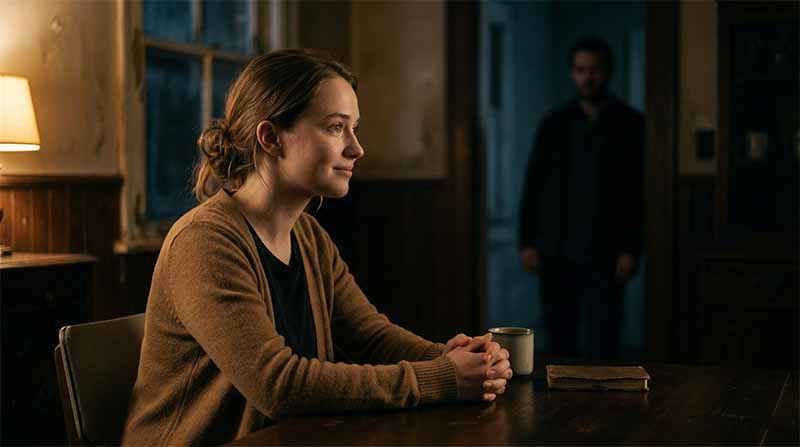
Audition (1999) and the Art of Psychological Betrayal
Audition is one of the rare horror films whose power comes less from immediate terror than from the patient destruction of trust. Directed by Takashi Miike and adapted from the novel by Ryu Murakami, the film begins with extraordinary restraint. Its opening movement feels almost gentle: a widower, years after the death of his wife, is encouraged to rebuild his emotional life. The premise appears domestic, melancholic, even tender. That surface calm is the trap. Miike constructs the film so that the viewer is gradually disarmed, encouraged to settle into familiar emotional rhythms before realizing that the entire structure has been designed as a controlled collapse.
What makes the film so enduring is the precision of that transformation. Audition does not announce its cruelty. It withholds it. The early scenes are built around loneliness, social etiquette, and longing, which makes the eventual rupture feel uniquely invasive. Shigeharu Aoyama is not framed as a melodramatic villain, yet the film quietly exposes the ugliness beneath his method. The fake audition is not merely a narrative device; it is a moral reveal. Aoyama turns a public process into a private fantasy machine, screening women according to grief, silence, beauty, and compliance. He is not seeking a person in full complexity. He is seeking an image he can inhabit and control.
The Male Gaze as Narrative Trap
That is why Asami is such a devastating figure. Played by Eihi Shiina with extraordinary stillness, she initially appears as the perfect answer to Aoyama’s projection: elegant, wounded, quiet, and inscrutable. But Audition is fundamentally about the violence hidden inside idealization. Aoyama believes he is choosing Asami; in reality, he is entering a structure of misrecognition in which his own desires become the instrument of his destruction. The film’s genius lies in showing how fantasy itself becomes a blindfold.
Shiina’s performance is central to the film’s legacy. She does not play Asami as a conventional horror antagonist. Instead, she embodies a near-sculptural calm that makes every later escalation more destabilizing. Her presence suggests emotional vacancy and suppressed memory at the same time. Miike exploits this ambiguity masterfully. The viewer, like Aoyama, keeps trying to decode her through familiar categories — innocence, romance, fragility, trauma — but the film refuses to let those categories hold. Asami is not a stable answer. She is a destabilizing force produced by repression, injury, and male misreading.
How Audition Turns Stillness into Dread
One of the most remarkable achievements of Audition is its control of stillness. The film does not depend on constant motion, loud cutting, or exaggerated spectacle. It depends on waiting. Miike uses silence, composition, and temporal patience to generate unease long before the film enters overt horror territory. Few images in modern genre cinema are as unnerving as Asami seated in her apartment, motionless, near the telephone, suspended in a frame that feels almost dead until it suddenly becomes charged with threat. That scene captures the entire strategy of the film: absolute quiet, then a shock that redefines everything around it.
This formal control is what separates Audition from more disposable forms of extremity. The violence in the final section is not frightening merely because it is painful. It is frightening because the film has spent so long disciplining the viewer into emotional passivity. By the time the horror arrives, it feels intimate rather than spectacular. The body is no longer abstract. Pain is reduced to needle points, wire tension, breath, voice, and helpless proximity. The viewer is not overwhelmed by scale, but by concentration.
Trauma, Desire, and the Collapse of Romantic Illusion
At its core, Audition is not simply a horror film about punishment. It is a film about the collision between fantasy and buried violence. Aoyama wants renewal without unpredictability. He wants intimacy without true reciprocity. The fake audition gives him the illusion of order and authorship, but Miike slowly reveals that this desire for control is already ethically diseased. The film therefore works as a critique of emotional selection itself: the urge to sort, simplify, and possess another human being as though they were an answer to grief.
Asami, meanwhile, emerges as one of the great traumatic figures in late-1990s horror cinema. The film never reduces her to a simple symbol, but it makes clear that her violence is inseparable from damage. That does not redeem her actions, nor does it flatten her into mere victimhood. Instead, Miike allows her to exist in an unbearable ambiguity — both shaped by abuse and terrifyingly active within it. That tension gives the film its unique emotional aftertaste. Audition is not frightening only because of what happens. It is frightening because it dissolves the distinction between romance, pity, desire, and predation.
Why Audition Endures in Horror History
The reason Audition continues to occupy such a central place in Japanese horror and global extreme cinema is that it redefined what many viewers expected from cinematic terror. It showed that dread could be built through deception rather than immediacy, through social discomfort rather than supernatural mythology, through emotional manipulation rather than noise. Its final reputation often overshadows its formal elegance, but that elegance is exactly why the ending hits with such force. The film is not chaotic. It is meticulously prepared.
Within the context of Sharing The Sickness, Audition belongs in the archive because it altered the language of transgressive horror without abandoning discipline, beauty, or structure. It is not simply notorious. It is crafted. It remains a defining example of how horror can emerge from politeness, from projection, from stillness, and from the catastrophic consequences of mistaking a person for a fantasy.
💎 Verified Fact: The most brilliant formal trick in Audition is that the film’s first half is not a delay before the horror — it is the horror. Miike weaponizes emotional softness, polite conversation, and romantic framing so effectively that when the final act arrives, the viewer realizes the film has been studying vulnerability, power, and fantasy from the very first scene. The betrayal is structural, not just narrative.
Frequently Asked Questions About Audition (1999)
Is Audition (1999) really as disturbing as people say?
Yes — but its impact comes from structure, not just content. The film spends nearly an hour building a calm romantic tone before abruptly shifting into extreme psychological horror, making the final act far more shocking than typical horror films.
What is the meaning behind the final torture scene in Audition?
The infamous ending is not just shock value — it reflects suppressed trauma, control, and the reversal of power dynamics. The protagonist’s earlier objectification of women is mirrored back at him in a brutally literal form.
Is Audition based on a true story or a book?
Audition is based on the novel by Ryū Murakami, a writer known for blending psychological realism with extreme violence, often exploring loneliness and emotional disconnection in modern Japan.
Why does Audition feel so realistic compared to other horror films?
Director Takashi Miike intentionally shot the first half like a grounded drama, using natural pacing and minimal stylization. This realism makes the later horror feel invasive and personal rather than fictional.
What makes Audition (1999) important in horror history?
Audition is considered a landmark in extreme cinema because it redefined how horror can be structured — using emotional deception instead of immediate fear, influencing modern slow-burn and psychological horror films.